
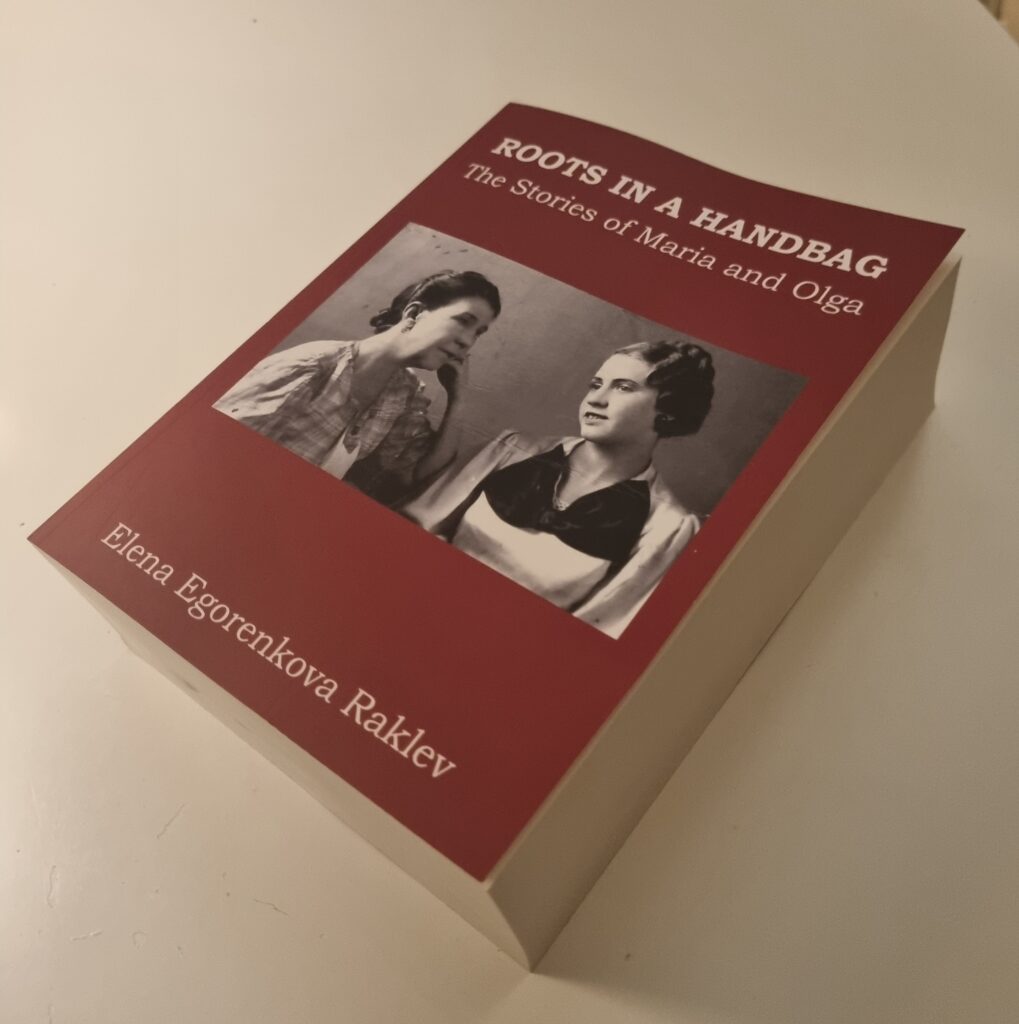
Explore the Inspirations Behind my Story
Delve into the background and ideas that inspired ‘Roots in aHandbag,’ revealing the real-life people and events that shaped its narrative and fueled the author’s creativity.
Behind my Story “Roots in a Handbag” – the People and the Facts
Have you ever tried researching five generations back in a geographically dispersed family — your family — whose story you wanted to write? And then, once started, you just couldn’t stop, to the point it almost became an addiction? Haven’t you wondered, at that point, if you weren’t plain crazy? Because what was all that past to you anyway?! As experts say, we should live in the now.
Well, I’ve just spent four years on precisely such a project. Just looking briefly back – oh my goodness! This has been one tough journey. I struggled with the historical complexities of the Russian émigré diaspora. I perused the often unfriendly vastness of the Internet. I explored the fragmented Facebook archipelago. I swallowed tons of documentation and literature — some tasty, some not so much. I made and maintained links with a lot of people — family and beyond — willing to tell me their stories. Sharing is caring.
What did I learn? One: individuals do leave a trace. It may not always be visible at first sight, but it’s there. Two: families take history and make their own stories, which in turn make the world go round.
Here’s a foretaste of some of my kin’s stories. These fragments are only glimpses — the full tapestry unfolds in the book.
WHO WERE MARIA AND OLGA?
Maria Semyonovna Kozlova was my maternal great-great-grandmother, born in a noble family in Oryol in 1880. Maria married an officer of the Russian Imperial Army, Aleksey Pavlovich Kozlov and had two children with him – a son and a daughter. After his deployment in the Russo-Japanese War in 1904-5, Aleksey was posted to Vladivostok, where Maria and the children followed him in 1906. Most of the family remained there until the early 1920s and beyond, living through the nightmare that Vladivostok was with its constant changes of government. Finally, after the arrival of the Red Army in 1922, their lives changed drastically as is described in the book.
Olga was my maternal grandmother, the only daughter of Pavel Alekseyevich Kozlov (Maria’s son) and Maria Timofeyevna Pujkhalova. She was born in Vladivostok in 1920. In 1927 she was sent by her parents to Harbin for a short holiday with her grandmother Maria, who at that point had left Russia. Then things took such a turn that she remained in Harbin, her connection with her parents eventually severed due to various political developments. Before the 1920s, Harbin was an extension of the Russian Empire. Also called the Paris of the Far East, this was a city in the north of China (Manchuria) born out of the construction of the Chinese-Eastern Railway. To construct this Railway that had more than one branch, the Russian Tsarist Government took a concession from China. The city had an amazing growth and development all the way to the early 1930s, after which it started to decline, first due to the Japanese invasion of Manchuria and then in the aftermath of the Second World War. Eventually, Grandmother Olga, who by then had a family of her own, had to leave China — alongside many others — emigrating to Rio de Janeiro, Brazil.
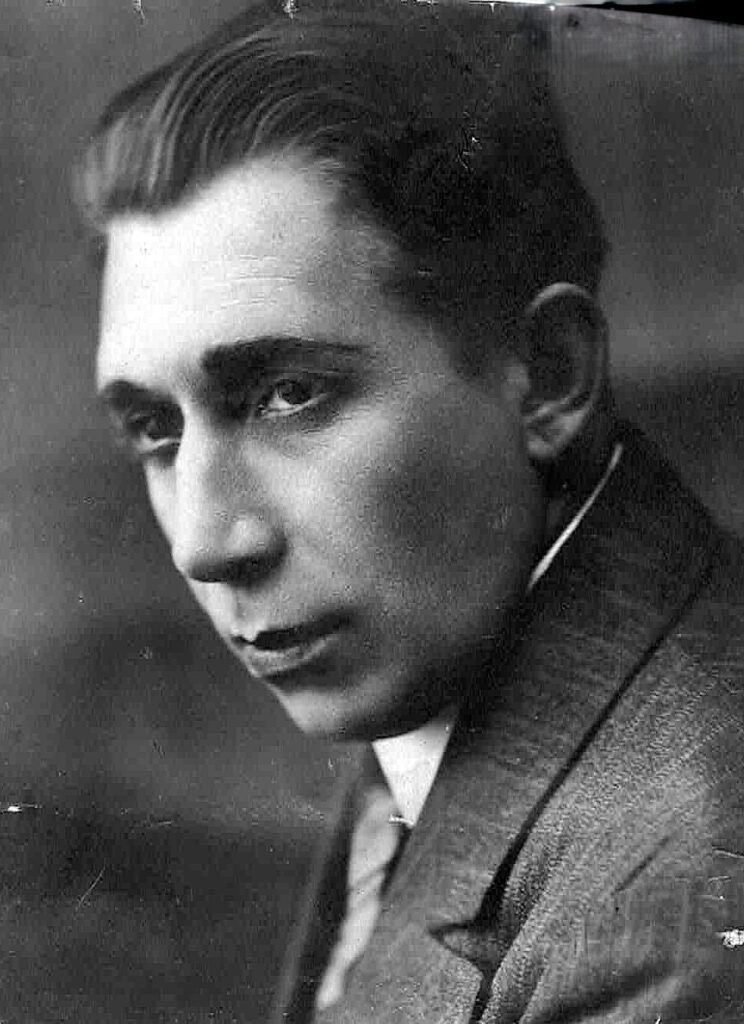
GREAT GRANDFATHER PAVEL KOZLOV
There is a charming anecdote about an old survivor from the Russian nobility who lives in a faraway Siberian town. Now a politically correct proletarian, he nevertheless preserves one good jacket from the old times. Eventually, it begins to need a proper repair. Our man happens to know a tailor who sews privately and takes it to him. The tailor is impressed by the jacket’s good cut. He asks where it was made. “In Paris, France” answers the older man, feeling that he can talk in confidence. “And just how far away is that from here?”. “Oh, I don’t know. Maybe about 10,000 km,” offers his customer. “Oh, my!” goes the tailor, “such wilderness! And still – they make such good clothes!”.
This joke always makes me remember my maternal great grandfather, Pavel Alekseyevich Kozlov. He was born in 1899 in Oryol, western Russia and raised from age six in Vladivostok in the Russian Far East. Young Pavel was a good-looking man who liked to dress well. He was also highly talented: he wrote, acted, played the piano, sang, and could even draw. Yet besides all that, he stands out in my maternal family line as the man who refused to emigrate after the Soviet Red Army took over the Russian Far East. He certainly didn’t have, as they then said, ‘the right biography’. A nobleman and later a fighter in the White Army, he was everything that the new Russian state wanted gone. Except that he didn’t want to be gone. Instead, he set himself a goal. Already an amateur actor in his spare time, he joined the Moscow worker agitprop troupe ‘Blue Blouse’ and moved to Moscow, where he completed an actor’s education. Then he toured extensively east of the Urals before settling in Novokuznetsk. His wife Maria Timofeyevna faithfully remained by his side, until the very end.
Pavel had an interesting life, yet he never managed to see his daughter again. Still, life didn’t break Pavel; he found in it much of what he wanted.
GREAT GRANDMOTHER MARIA PUJKHALOVA
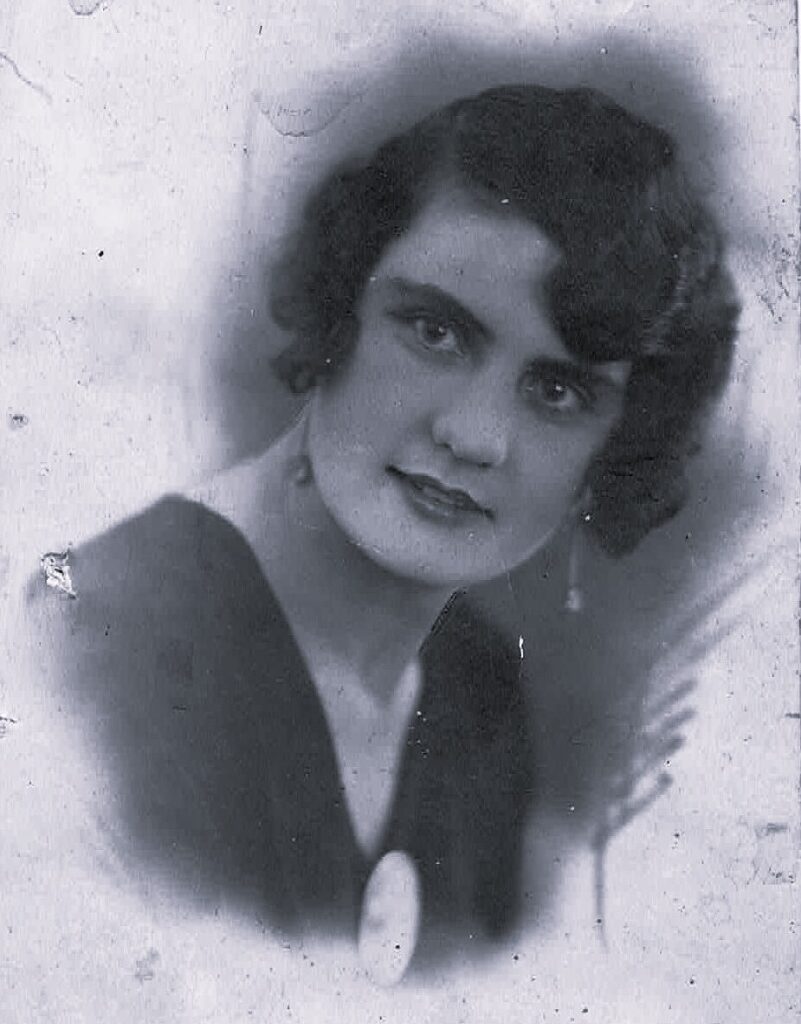
Maria – or Musya, as she was called in the family, was a tragic heroine, in many ways. The story of a mother and a daughter separated for more than thirty years by geopolitical circumstances can’t be anything but sad and painful. I have this theory that the tragic echoes such things create can keep rolling down the line for several generations. What do you think?
Musya – the beloved second daughter of a Vladivostok merchant, caringly raised and educated – paid a high personal price for the political changes that happened in her city and country in the 1920s. Although her ultimate reward was that, towards the end of her life, she managed to see again her daughter, her granddaughter and her great granddaughter (me). Not for a long time, but still.
Musya’s father was a phenomenon of his own. He started as a migrant from what is now southern Ukraine to the Russian Far east at the end of the nineteenth century. He ended up as a merchant of the second guild in Vladivostok in the early twentieth century. He was also able to give a good education to his two daughters – Maria and Alexandra.
It often seems incredible what people can endure and still manage to make an impact. Isn’t it amazing how resilient we are?
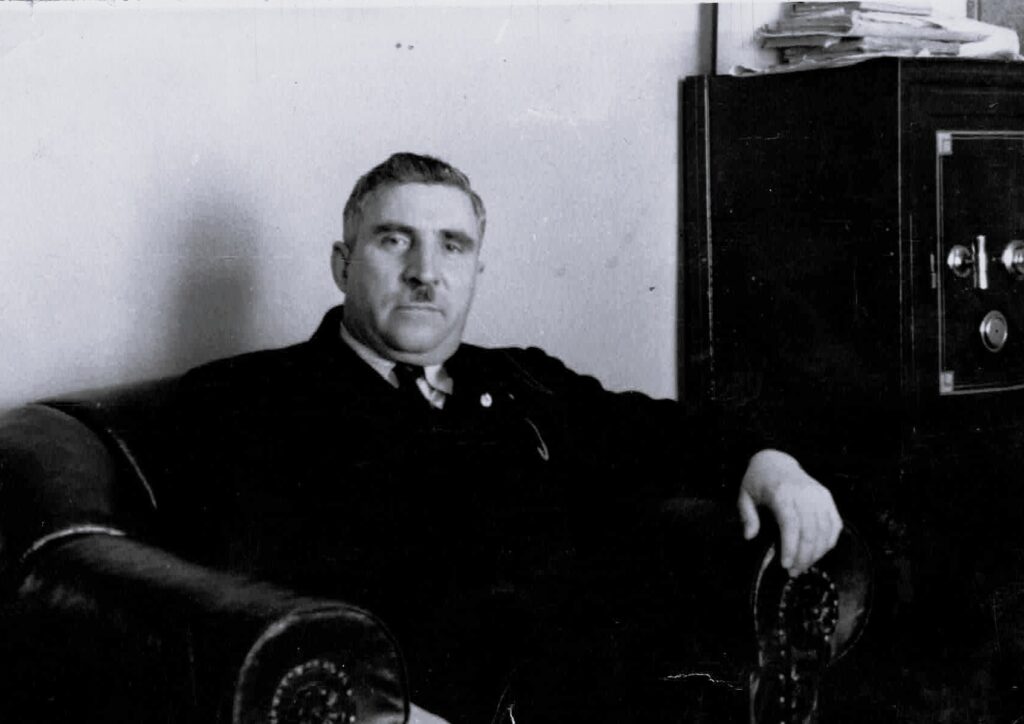
GREAT GRANDFATHER AFANASY EGORENKOV
Imagine that the year is 1905. You’re nineteen years old. You live in a small Russian village in southwestern Russia. The closest urban centre is Bryansk, about 230 km away. Your father has asked you to join him in Harbin, Northern China. That’s about 6,300 km away to the east. How will you get there? What will you take with you on this journey?
You’ll have to first get to Bryansk, by horse cart. From there, you ‘ll jump on a train to Moscow. The train ride is about twelve hours, and you’re a passenger in the monkey-monkey class. In Moscow where — by the way, you’ve never been before — you’ll take the Trans-Siberian Railway. You’ll then ride all the way to Chita – without monkeys but possibly with some chickens – in the far Russian Northeast. This means that you’ll almost cross Siberia and even what lies beyond it. In Chita, drying up sweat, you’ll transfer to the Chinese Eastern Railway and cross Manchuria. If you’re lucky, the whole travel will be about three weeks, maybe even longer if you miss some connections.
As a rather poor Russian peasant, you pack your valenki (felt boots) and your cotton padded jacket. That’s for later. For now, you don a clean shirt and coat and your newest bast shoes plus foot wraps. You pack all the bread you have and dream that there’ll be tea with sugar on the way. Then you kiss your mother, cross yourself, take your courage in both hands and go. You’re excited beyond measure and a bit afraid. And when you finally arrive, the place is nothing like you thought it would be.
You’ve just been in the shoes of my maternal great great grandfather, Afanasy Afanasyevich Egorenkov.
The Russian name Afanasy comes from the Greek Athanasios, meaning “eternal” or “immortal”. Great grandfather wasn’t that, yet he was a man that achieved a whole lot in his life. He became a successful businessman in Harbin, trader of commodities and owner of rental properties. Besides, he funded his two sons’ engineering education and also helped my grandmother, the wife of his youngest son and my grandfather Mikhail, get into business. A long way to go for a peasant lad from the Cherten’ village.
MATERNAL GREAT GRAND AUNT PARASKEVA EGORENKOVA
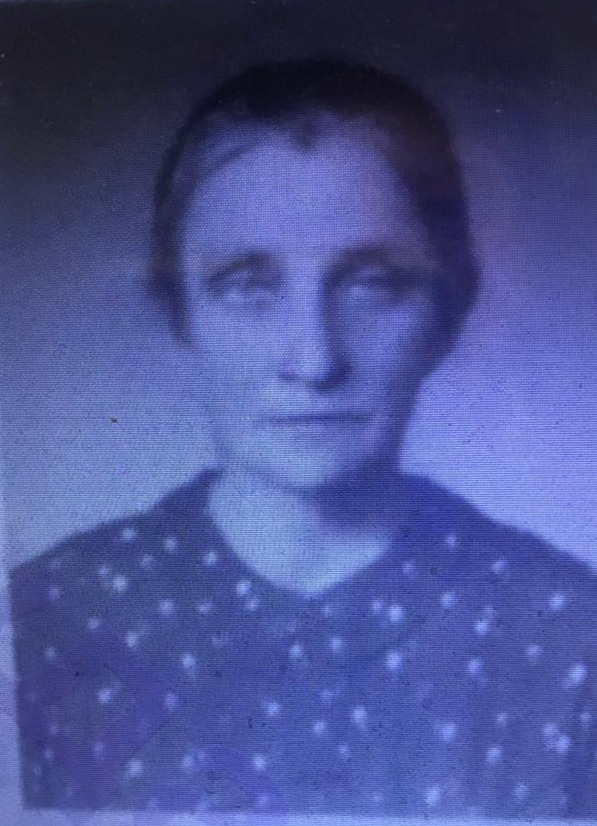
Sometimes I think that I could have made a decent archaeologist. In the last few years, I spent innumerable hours ‘on the dig’, researching the lives of my relatives. For example, I learned that my great grandfather had more than one sibling, including a sister – Paraskeva. I even came across her picture – a woman with huge sad eyes. Through the mist of times, those eyes almost begged me for attention.
Finding the traces of women eighty years back in history is a challenge. While men had businesses, occupations, memberships of various organizations, women bore the family name of their husbands, had no higher education and no profession apart from ‘housewife’. Soon, I almost despaired, while people kept pointing me to ‘original sources’. Well, considering that she was born in a village in southwestern Russia that no longer exists and was buried in a cemetery in Northern China that no longer exists either, this wasn’t really all that helpful.
One day, scanning the Internet, I saw article written by a Russian historian in a town in Siberia where I’ve never been, in an online newsletter I didn’t know. But what caught my eye was a mention of a third-generation harbinka (feminine for harbinets, that is a resident of Harbin). Her family name was the name of Paraskeva’s husband. I spent some time thinking what to do. In terms of international politics, it wasn’t the best moment to go on with my search. On the other hand, if we all waited for politics to get right maybe we would never have a life.
Finally, I asked another newly found relative in Russia, to investigate on her side. Or as they say in organizational lingo, I fully empowered her. This yielded a contact name, which was nothing short of the Dean of the historical faculty in that town. I wrote to the dean thinking this was really a long shot. But he answered the next day saying: ‘I fully support any efforts that have to do with finding one’s family’ and provided the contact of the lady who wrote the article. It turned out she was a staff of his faculty. I then got hold of the actual ‘harbinka‘ and yes, she turned out to be the blood sister of my great-grand uncle. She then led me to him – he currentlhy lives in Sydney. Australia.
Discoveries like this and the kindness of strangers were what kept me going.